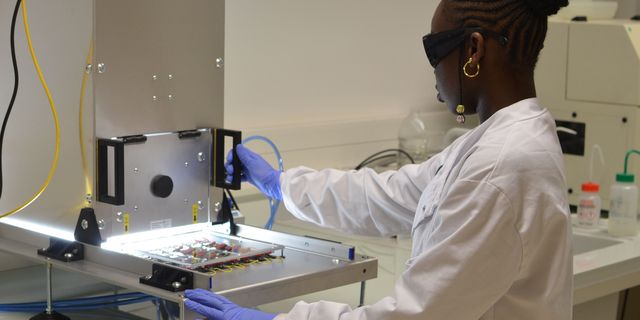
Mechanical studies of solid-state lithium battery interfaces are key to tackle issues such as dendrite growth, which can lead to short circuits or mechanical delamination between the negative electrode (i.e., anode) made of lithium metal and solid electrolyte interface. A methodology has been developed using a 180° peel test to study interfacial mechanical properties by quantifying the adhesion level between a lithium electrode and a solid polymer electrolyte based on poly(ethylene oxide) through the determination of the critical peeling force Fc. It was found that the annealing time at 80 °C affected the interfacial adhesion properties, highlighting two adhesive regimes before and after 6 h of annealing. To understand the origin of this variation, X-ray photoelectron spectroscopy was used to analyze the lithium metal anode surface. In addition, the morphologies of the materials after peel tests were investigated using scanning electron microscopy, revealing the replication of the lithium grain boundaries on the solid electrolyte surface during the annealing process. Variations in peel strength as a function of annealing time were also linked with the anode/electrolyte interface resistance determined by electrochemical impedance spectroscopy. Similarly to the adhesion properties, two regimes of interface resistance were also observed before and after 6 h annealing time. The interfacial adhesion between the solid polymer-based electrolyte and lithium metal is thus governed by surface interaction, via the gradual migration or deposition of chemical elements from the electrolyte to the lithium, and mechanics, via surface replication. This peel test methodology is therefore a reliable and robust tool for characterizing interfaces and their evolution over time.